
Rubraca logo
  • Ovarian Cancer
  • Important Safety Information
  • Full Prescribing Information
  • Patient Site
  • Contact Us
  • Ovarian Cancer
  • Important Safety Information
  • Full Prescribing Information
  • Patient Site
  • Contact Us
  • EFFICACY & SAFETY
    • TRITON3 RESULTS
    • TRITON2 RESULTS 
    • SAFETY
  • DOSING & ADMINISTRATION
  • ACCESS & SUPPORT
  • mCRPC & PARPis
    • mCRPC DISEASE BURDEN
    • OPTIMIZING PARPi TREATMENT 
  • SIGN UP & REQUEST A REP
  • EFFICACY & SAFETY
    • TRITON3 RESULTS
    • TRITON2 RESULTS 
    • SAFETY
  • DOSING & ADMINISTRATION
  • ACCESS & SUPPORT
  • mCRPC & PARPis
    • mCRPC DISEASE BURDEN
    • OPTIMIZING PARPi TREATMENT 
  • SIGN UP & REQUEST A REP

FIRST AND ONLY PARPi PROVEN
SUPERIOR TO CHEMOTHERAPY IN A 
HEAD-TO-HEAD TRIAL1,2

RUBRACA significantly delays disease progression vs docetaxel2

RUBRACA significantly improves rPFS vs docetaxel in chemotherapy-naïve patients with BRCA-mutated mCRPC

RUBRACA provided a 50%

reduction in disease progression risk1

Significant improvement in rPFS vs physician's choice* in patients with BRCA-mutated mCRPC1,2

RUBRACA was shown to significantly extend rPFS by nearly 5 months vs physician’ s choice1

VIEW THE FULL TRITON3 STUDY DESIGN AND BASELINE PATIENT CHARACTERISTICS

TRITON3 was an international, multicenter, randomized, open-label Phase 3 trial enrolling 405 chemotherapy-naïve patients with BRCA-mutated mCRPC who progressed on prior ARPI therapy.1

Patients were randomized 2:1 to receive RUBRACA 600 mg orally twice daily or physician’s choice of docetaxel or a second-generation ARPI (abiraterone or enzalutamide). Randomization was stratified by ECOG PS (0 vs 1), hepatic metastases (yes vs no), and gene alteration (BRCA1 vs BRCA2 vs ATM). The primary endpoint was rPFS by IRR and key secondary endpoints included OS and ORR by IRR. Patients continued treatment until progression, with crossover to RUBRACA allowed at physician’s discretion. Patients also received a concomitant GnRH analog or had a prior bilateral orchiectomy.1
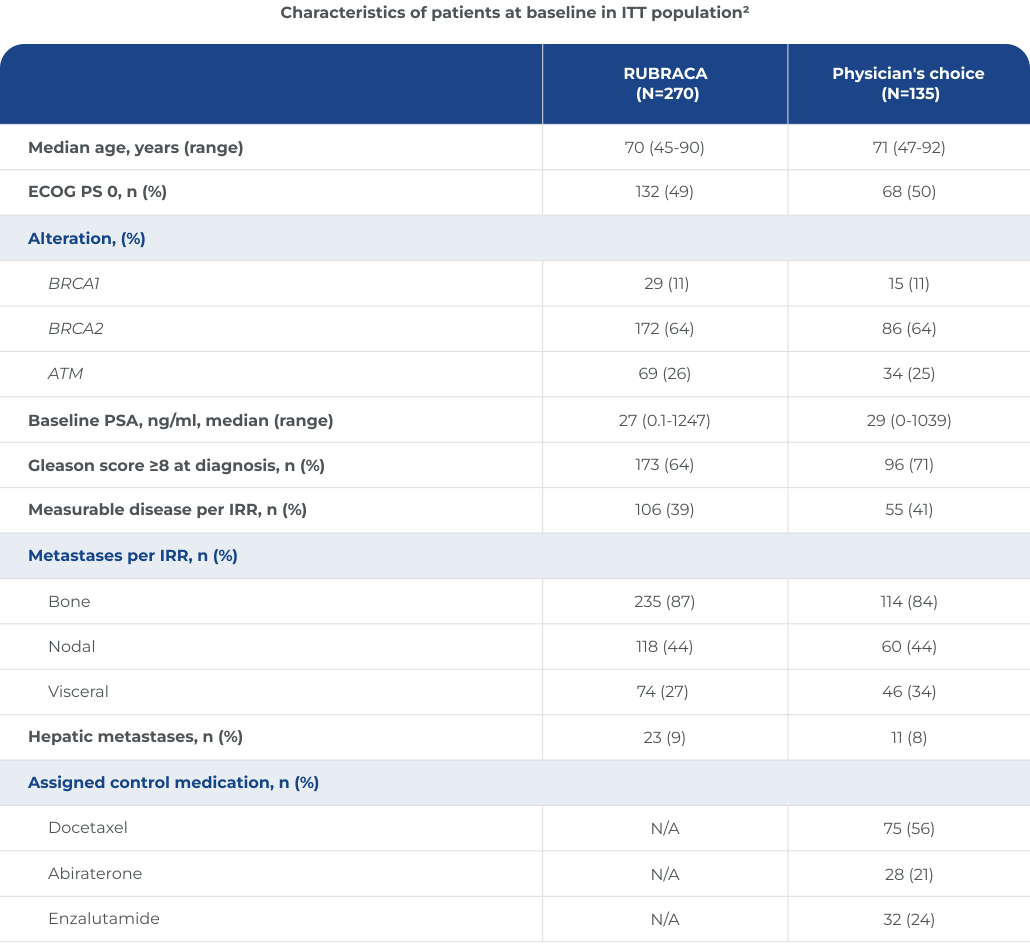
TRITON3 study participant characteristics at baseline.

Characteristics of patients at baseline in ITT population2

TRITON3 study participant characteristics at baseline.

Of patients with BRCA mutations3:

  • In the RUBRACA arm, 80/201 (40%) were germline and 116/201 (58%) were somatic with 5/201 (2%) BRCA mutation status unknown
  • In the physician’s choice arm, 39/101 (39%) were germline and 48/101 (48%) were somatic with 14/101 (14%) BRCA mutation status unknown

Additional key efficacy endpoints from TRITON3

RUBRACA significantly improves median rPFS vs second-generation ARPI 
(abiraterone or enzalutamide)2

  • 11.2 months with RUBRACA vs 4.5 months with second-generation ARPI (HR: 0.38 [95% CI: 0.25-0.58])
75% of patients crossed over to RUBRACA.

OF ELIGIBLE PATIENTS FROM THE PHYSICIAN’S CHOICE ARM CROSSED OVER TO RUBRACA, CONTRIBUTING TO SIMILAR TREATMENT OUTCOMES4

  • RUBRACA showed a small increase in median OS, tempered by high crossover from the physician’s choice arm1
  • 23.2 months (RUBRACA) vs 21.2 months (physician’s choice control arm) (HR, 0.91 [95% CI, 0.68–1.20]; P=n.s.) after an overall median follow-up of 
44.0 months1

EXPLORE TRITON2 EFFICACY RESULTS FOR BRCA-MUTATED mCRPC

VIEW DATA
*Physician’s choice included docetaxel or a second-generation ARPI (abiraterone or enzalutamide).
ARPI, androgen receptor-pathway inhibitor; ATM, Ataxia-Telangiectasia Mutated; BRCA, BReast CAncer gene; ECOG PS, Eastern Cooperative Oncology Group performance status; GnRH, gonadotropin-releasing hormone; IRR, independent radiology review; ITT, Intent to treat; mCRPC, metastatic castration-resistant prostate cancer; n.s., not significant; ORR, objective response rate; OS, overall survival; PARPi, poly (adenosine diphosphate-ribose) polymerase inhibitor; PSA, prostate-specific antigen; rPFS, radiographic progression-free survival.
REFERENCES: 1. RUBRACA (rucaparib). Prescribing Information. pharmaand GmbH. 2025. 2. Fizazi K, Piulats JM, Reaume MN, et al. Rucaparib or physician's choice in metastatic prostate cancer. N Engl J Med. 2023;388(8):719-732. 3. Chowdhury S, Bryce A, Fizazi K, et al. Impact of germline vs somatic BRCA mutation status on the efficacy of rucaparib vs physician’s choice in the TRITON3 study of patients with metastatic castration-resistant prostate cancer. J Clin Oncol. 2025;43(16_suppl):5060. 4. Bryce AH, McDermott R, Piulats J, et al. Rucaparib versus docetaxel or second-generation androgen pathway inhibitor therapy for metastatic castration-resistant prostate cancer: TRITON3 final overall survival and safety. Poster presented at: 2025 ASCO GU Symposium; February 13-15, 2025; San Francisco, CA.

Tap for safety information


INDICATION AND IMPORTANT SAFETY INFORMATION

INDICATION

RUBRACA® (rucaparib) is indicated for the treatment of adult patients with a deleterious BRCA mutation (germline and/
or somatic)-associated metastatic castration-resistant prostate cancer (mCRPC) who have been treated with androgen receptor-directed therapy. Select patients for therapy based on an FDA-approved companion diagnostic for RUBRACA.

SELECT IMPORTANT SAFETY INFORMATION

Myelodysplastic Syndrome (MDS)/Acute Myeloid Leukemia (AML) occur in patients treated with RUBRACA, and are potentially fatal adverse reactions. In 2141 treated patients with ovarian and prostate cancer, MDS/AML occurred in 34 patients (1.6%), including those in long term follow-up. Of these, 14 occurred during treatment or during the 28-day safety follow-up (0.7%).

The duration of RUBRACA treatment prior to the diagnosis of MDS/AML ranged from < 2 months to approximately 72 months. The cases were typical of secondary MDS/
cancer therapy-related AML; in all cases, patients had received previous platinum-containing chemotherapy regimens and/
or other DNA damaging agents.

In ARIEL3, of patients with ovarian cancer associated with a germline and/or somatic BRCA mutation who were treated with RUBRACA, MDS/AML occurred in 9 out of 129 (7%) patients treated with RUBRACA and 4 out of 66 (6%) patients treated with placebo. The duration of therapy with RUBRACA in patients who developed secondary MDS/cancer therapy-related AML varied from 1.2 to 4.7 years.

In TRITON3, MDS/AML occurred in 2 out of 201 patients (1%) with a BRCA mutation treated with RUBRACA. The duration of therapy with RUBRACA in patients who developed secondary MDS/cancer therapy-related AML varied from 1.4 to 2.3 years.

Do not start RUBRACA until patients have recovered from hematological toxicity caused by previous chemotherapy (≤ Grade 1). Monitor complete blood counts for cytopenia at baseline and monthly thereafter for clinically significant changes during treatment. For prolonged hematological toxicities
(> 4 weeks), interrupt RUBRACA or reduce dose and monitor blood counts weekly until recovery. If the levels have not recovered to Grade 1 or less after
4 weeks or if MDS/AML is suspected, refer the patient to a hematologist for further investigations, including bone marrow analysis and blood sample for cytogenetics.

If MDS/AML is confirmed, discontinue RUBRACA.

Based on findings from genetic toxicity and animal reproduction studies, RUBRACA can cause fetal harm. Advise male patients with female partners of reproductive potential or who are pregnant to use effective methods of contraception during treatment and for 3 months following last dose of RUBRACA. Advise male patients not to donate sperm during therapy and for 3 months following the last dose of RUBRACA.

Most common adverse reactions of patients with BRCA-mutated mCRPC treated with RUBRACA in TRITON3 (≥10%, Grade 1-4) were fatigue/asthenia (61%), musculoskeletal pain (53%), nausea (51%), decreased appetite (34%), diarrhea (31%), constipation (31%), vomiting (25%), dyspnea (19%), dysgeusia (18%), edema (18%), abdominal pain (17%), dizziness (16%), weight decreased (16%), rash (13%), headache (12%), peripheral neuropathy (12%), photosensitivity reaction (12%), and urinary tract infection (10%).

Most common select laboratory abnormalities of patients with BRCA-mutated mCRPC treated with RUBRACA
in TRITON3 (≥ 25%, Grade 1-4) were increased ALT (68%), decreased neutrophils
(67%), decreased phosphate (64%), decreased hemoglobin (60%), increased AST (59%), increased creatinine (56%), increased glucose (45%), decreased lymphocytes (43%), decreased sodium (35%), decreased platelets (34%), and increased calcium (29%).

Most common adverse reactions of patients with BRCA-mutated mCRPC treated with RUBRACA in TRITON2 (≥ 20%; Grade 1-4) were fatigue/asthenia (62%), nausea (52%), decreased appetite (28%), rash (27%), constipation (27%), vomiting (22%), and diarrhea (20%).

Most common laboratory abnormalities of patients with BRCA-mutated mCRPC treated with RUBRACA in TRITON2 (≥ 35%; Grade 1-4) were increased ALT (69%), decreased leukocytes (69%), decreased phosphate (68%), decreased absolute neutrophil count (62%), decreased hemoglobin (59%), increased alkaline phosphatase (44%), increased creatinine (43%), decreased lymphocytes (42%), increased triglycerides (42%), decreased platelets (40%), and decreased sodium (38%).

Concomitant administration of RUBRACA with CYP1A2, CYP3A, CYP2C9, or CYP2C19 substrates can increase the systemic exposure of these substrates, which may increase the frequency or severity of adverse reactions of these substrates. If concomitant administration is unavoidable between RUBRACA and substrates of these enzymes where minimal concentration changes may lead to serious adverse reactions, decrease the substrate dosage in accordance with the approved prescribing information.

If concomitant administration with warfarin (a CYP2C9 substrate) cannot be avoided, consider increasing the frequency of international normalized ratio (INR) monitoring.

Full Prescribing Information available at: https://www.rubracahcp.com.

For medical information inquiries within the U.S., contact pharma& at medinfo.us@pharmaand.com.

You may report adverse events to the FDA at 1-800-FDA-1088 or www.fda.gov/
medwatch
.

Alternatively, to report an adverse event or reaction, contact pharma& at pv@pharmaand.com.

To report a product complaint, contact pharma& at complaints@pharmaand.com.

Please see full Prescribing Information for RUBRACA.
Tolmar Inc logo

The individuals pictured in this site are models, and the images are being used for illustrative purposes only.

©2025 Tolmar, Inc. All rights reserved. Tolmar, ELIGARD, and their associated logos are trademarks of the Tolmar group. Third-party trademarks and product names belong to their respective owners. RUBRACA® is a registered trademark of pharma& Schweiz GmbH, used under license by Tolmar.
TPI.2025.eng.5181.v3 12/25

This site is intended for use by US healthcare professionals only.

  • CORPORATE OFFICES
  • 485 Half Day Road,
    Suite 400
    Buffalo Grove, IL 60089
  • 1-224-880-5770
  • info@tolmar.com
  • PRIVACY POLICY
  • SITE MAP
  • TERMS & CONDITIONS
  • TOLMAR

This site uses cookies, and your privacy is important to us. To accept third-party cookies, click “Accept All Cookies.”

See our Privacy Policy for more details.

  • EFFICACY & SAFETY
    • TRITON3 RESULTS
    • TRITON2 RESULTS 
    • SAFETY
  • DOSING & ADMINISTRATION
  • ACCESS & SUPPORT
  • mCRPC & PARPis
    • mCRPC DISEASE BURDEN
    • OPTIMIZING PARPi TREATMENT 
  • SIGN UP & REQUEST A REP
  • Ovarian Cancer
  • Important Safety Information
  • Full Prescribing Information
  • Patient Site
  • Contact Us

EXPANDED INDICATION

NOW APPROVED FOR USE 
BEFORE OR AFTER CHEMOTHERAPY

for the treatment of BRCA-mutated mCRPC1

  • ⁨⁨Backed by new clinical data from the Phase 3 trial, TRITON3
  • The first and only PARPi studied head-to-head with chemotherapy2
  • Can be used after ANY ARPI

Learn more about the updated indication in the full Prescribing Information

View Updated Prescribing Information

ARPI, androgen receptor pathway inhibitor; BRCA, BReast CAncer gene; mCRPC, metastatic castration-resistant prostate cancer;

PARPi, poly (adenosine diphosphate-ribose) polymerase inhibitor.

REFERENCES: 1. RUBRACA (rucaparib). Prescribing Information. pharmaand GmbH. 2025. 2. Fizazi K, Piulats JM, Reaume MN, et al. Rucaparib or physician’s choice in metastatic prostate cancer. N Engl J Med. 2023;388(8):719-732.

The information contained in this website is intended for US healthcare professionals only.

By clicking the button below, you acknowledge that you are a US healthcare professional.

I am a US healthcare professional
Cancel

YOU ARE NOW LEAVING RubracaProstateHCP.com

Are you sure you want to leave?

Continue
Cancel and stay
Skip to content
Rubraca® HCP
Powered by  GDPR Cookie Compliance
Privacy Overview

This website uses cookies so that we can provide you with the best user experience possible. Cookie information is stored in your browser and performs functions such as recognising you when you return to our website and helping our team to understand which sections of the website you find most interesting and useful.

Strictly Necessary Cookies

Strictly Necessary Cookie should be enabled at all times so that we can save your preferences for cookie settings.

3rd Party Cookies

This website uses Google Analytics to collect anonymous information such as the number of visitors to the site, and the most popular pages.

Keeping this cookie enabled helps us to improve our website.