
Efficacy results were based on the independent radiology review (IRR)–evaluable population (N=81). The primary endpoint was objective response rate (ORR), and a secondary endpoint was duration of response (DOR).1
*Demonstrated improvements in multiple efficacy outcomes: confirmed ORR by IRR, 46% (95% CI, 35%-57%); median DOR by IRR, 15.5 months (95% CI, 6.4-not reached).

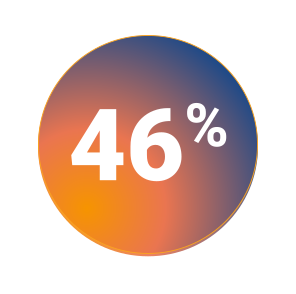
OBJECTIVE RESPONSE RATE1†
(n=37/81; 95% CI, 35%-57%)

MEDIAN DURATION OF RESPONSE1
(95% CI, 6.4-not reached)
†ORR was defined per modified RECIST v1.1 criteria and with no confirmed radiographic bone progression per PCWG3.
VIEW THE FULL TRITON2 STUDY DESIGN
TRITON2 was a multicenter, single-arm, phase 2 clinical trial in patients with germline or somatic BRCA-mutated mCRPC who had been treated with any androgen receptor-directed therapy and a taxane-based chemotherapy.1,2 Efficacy results were based on the IRR-evaluable population (N=81). The primary endpoint was ORR, and DOR was a secondary endpoint.1
This indication is approved under accelerated approval based on objective response rate and duration of response. Continued approval for this indication may be contingent upon verification and description of clinical benefit in confirmatory trials.1
a majority of patients
had a reduction in lesions1

OF IRR-EVALUABLE PATIENTS HAD A ≥30% REDUCTION IN TARGET LESION SIZE FROM BASELINE
Best Change From Baseline in Sum of Target Lesion(s) in the IRR-Evaluable Population
RUBRACA® (rucaparib) is indicated for the treatment of adult patients with a deleterious BRCA mutation (germline and/
or somatic)-associated metastatic castration-resistant prostate cancer (mCRPC) who have been treated with androgen receptor-directed therapy. Select patients for therapy based on an FDA-approved companion diagnostic for RUBRACA.
The duration of RUBRACA treatment prior to the diagnosis of MDS/AML ranged from < 2 months to approximately 72 months. The cases were typical of secondary MDS/
cancer therapy-related AML; in all cases, patients had received previous platinum-containing chemotherapy regimens and/
or other DNA damaging agents.
In TRITON3, MDS/AML occurred in 2 out of 201 patients (1%) with a BRCA mutation treated with RUBRACA. The duration of therapy with RUBRACA in patients who developed secondary MDS/cancer therapy-related AML varied from 1.4 to 2.3 years.
Do not start RUBRACA until patients have recovered from hematological toxicity caused by previous chemotherapy (≤ Grade 1). Monitor complete blood counts for cytopenia at baseline and monthly thereafter for clinically significant changes during treatment. For prolonged hematological toxicities (> 4 weeks), interrupt RUBRACA or reduce dose and monitor blood counts weekly until recovery. If the levels have not recovered to Grade 1 or less after 4 weeks or if MDS/AML is suspected, refer the patient to a hematologist for further investigations, including bone marrow analysis and blood sample for cytogenetics.
If MDS/AML is confirmed, discontinue RUBRACA.
Most common adverse reactions of patients with BRCA-mutated mCRPC treated with RUBRACA in TRITON3 (≥10%, Grade 1-4) were fatigue/asthenia (61%), musculoskeletal pain (53%), nausea (51%), decreased appetite (34%), diarrhea (31%), constipation (31%), vomiting (25%), dyspnea (19%), dysgeusia (18%), edema (18%), abdominal pain (17%), dizziness (16%), weight decreased (16%), rash (13%), headache (12%), peripheral neuropathy (12%), photosensitivity reaction (12%), and urinary tract infection (10%).
Most common adverse reactions of patients with BRCA-mutated mCRPC treated with RUBRACA in TRITON2 (≥ 20%; Grade 1-4) were fatigue/asthenia (62%), nausea (52%), decreased appetite (28%), rash (27%), constipation (27%), vomiting (22%), and diarrhea (20%).
Most common laboratory abnormalities of patients with BRCA-mutated mCRPC treated with RUBRACA in TRITON2 (≥ 35%; Grade 1-4) were increased ALT (69%), decreased leukocytes (69%), decreased phosphate (68%), decreased absolute neutrophil count (62%), decreased hemoglobin (59%), increased alkaline phosphatase (44%), increased creatinine (43%), decreased lymphocytes (42%), increased triglycerides (42%), decreased platelets (40%), and decreased sodium (38%).
If concomitant administration with warfarin (a CYP2C9 substrate) cannot be avoided, consider increasing the frequency of international normalized ratio (INR) monitoring.
For medical information inquiries within the U.S., contact pharma& at medinfo.us@pharmaand.com.
You may report adverse events to the FDA at 1-800-FDA-1088 or www.fda.gov/
medwatch.
Alternatively, to report an adverse event or reaction, contact pharma& at pv@pharmaand.com.
To report a product complaint, contact pharma& at complaints@pharmaand.com.
Please see full Prescribing Information for RUBRACA.


for the treatment of BRCA-mutated mCRPC1
Learn more about the updated indication in the full Prescribing Information
ARPI, androgen receptor pathway inhibitor; BRCA, BReast CAncer gene; mCRPC, metastatic castration-resistant prostate cancer;
PARPi, poly (adenosine diphosphate-ribose) polymerase inhibitor.
REFERENCES: 1. RUBRACA (rucaparib). Prescribing Information. pharmaand GmbH. 2025. 2. Fizazi K, Piulats JM, Reaume MN, et al. Rucaparib or physician’s choice in metastatic prostate cancer. N Engl J Med. 2023;388(8):719-732.